

Discovering Authentic Montessori Education at Kinderhaus Montessori Preschool
- Jan 21
- 5 min read
Updated: Mar 31
Have you noticed that children's learning methods differ? Some kids thrive on exploration and activities, while others prefer watching, listening, or working quietly on their own.
At Kinderhaus Montessori Preschool, we firmly believe that children should be taught in a way that suits their preferences. This belief is the foundation of everything we do at Kinderhaus NSW.
Instead of expecting children to follow one fixed learning style, we customise the learning approach and environment to their needs and preferences. Let us explore how Kinderhaus NSW supports every child’s unique learning way and why this approach makes such a meaningful difference.
Individualised Learning is at the Core of Our Philosophy
Each child is different. Kinderhaus views every student as a unique individual who arrives in class with their own set of likes, strengths, and learning speeds.
The Montessori practice of individualised learning, which we follow, is the very core of our teaching method.
Teachers spend time getting to know each student, understanding their learning process, and guiding them accordingly.
This approach ensures that children feel supported, confident, and capable rather than rushed and constantly compared to others.
Learning at a Pace That Feels Right
No one should feel pressured. Some children can’t wait to tackle new challenges, while others need more time to feel secure.
At Kinderhaus NSW, children are allowed to learn at their own pace. They are never forced to keep up with or slow down to match a group.
When kids can progress at their own speed, the learning process remains enjoyable and stress-free.
This helps lay a strong foundation for lifelong learning and self-esteem.
Hands-On Learning Through Real Experiences
Learning by doing is essential. Experiencing the learning process firsthand is the best way for children to absorb knowledge. The Montessori method places a strong emphasis on practical, hands-on activities, turning abstract ideas into something tangible.
At Kinderhaus NSW, children grasp concepts by engaging in practical activities like pouring water, sorting, building, counting, and solving problems.
These experiences make learning real and significant; it’s not just about rote memorisation.
Supporting Different Learning Styles
Visual, auditory, and kinaesthetic learners all thrive in our environment. Not all kids learn in the same way, and that’s something we celebrate at Kinderhaus NSW. Our Montessori learning materials are designed to engage the senses, making them ideal for:
Kinaesthetic learners, who learn through movement and touch
Visual learners, who understand best through seeing
Auditory learners, who capture information by listening
Our diverse range of activities ensures that every child connects with learning in a way that feels natural to them.
Encouraging Independence and Self-Directed Thinking
Helping children think for themselves is vital. One of the most powerful aspects of Montessori education is its emphasis on independence.
At Kinderhaus, toddlers are encouraged to select activities that excite them and tackle challenges independently, with support when needed.
This method teaches children to make their own choices, think critically, and accept responsibility. Gradually, they become assertive, inquisitive, and eager to explore new concepts.
Learning Through Social Interaction and Cooperation
Growing together is essential. In addition to independent learning, children greatly benefit from learning with others. Kinderhaus promotes a cooperative atmosphere where kids develop skills in sharing, turn-taking, and mutual support.
Through group activities, communication, empathy, and cooperation flourish. These social situations equip children with emotional skills that are vital not only for academic success but also for building healthy relationships.
A Calm, Prepared Learning Environment
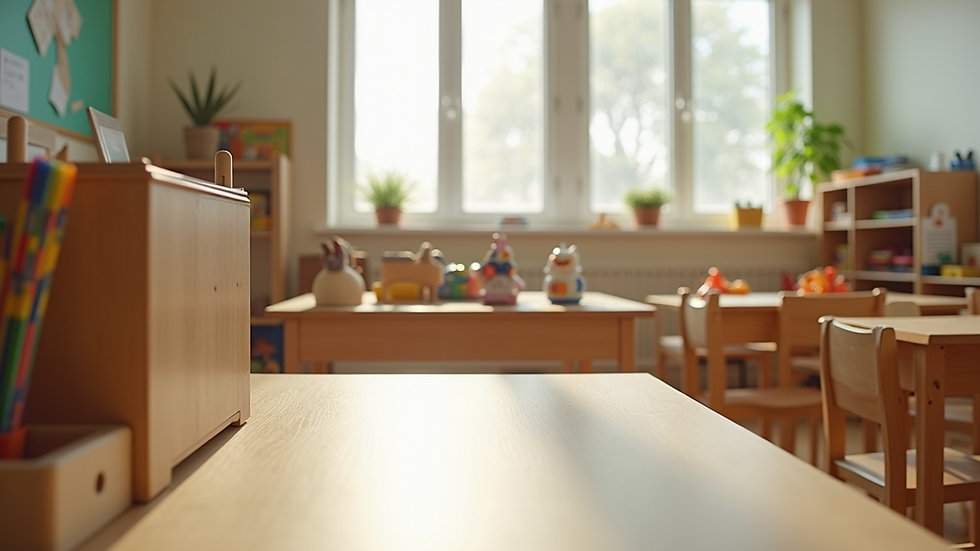
Spaces designed for focus and exploration are crucial. The overall atmosphere significantly impacts children's learning. The classrooms at Kinderhaus NSW are thoughtfully prepared to be peaceful, well-organised, and inviting.
Learning materials are positioned for easy access, allowing children to independently choose activities that interest them.
The transparency in structure and consistency in approach provide children with a sense of security, enabling them to concentrate and explore without interruption.
Why Kinderhaus Montessori Preschool Is the Right Choice
If you are searching for an early learning centre or preschool near me, Kinderhaus Montessori Preschool in NSW offers an environment where every child’s learning journey is respected.
We focus on:
One-on-one guidance
Hands-on, practical learning
Self-directed exploration
Social cooperation
Experiences that build confidence
Children at Kinderhaus NSW become academically strong while remaining curious, independent, and confident.
The Importance of Community in Learning
Building connections is vital. At Kinderhaus, we understand that learning extends beyond the classroom. We encourage families to engage with our community, fostering a sense of belonging and support.
When parents and educators work together, children benefit immensely. They see that learning is a shared journey, one that involves collaboration and encouragement.
This partnership strengthens the learning experience and enriches the lives of everyone involved.
Embracing Diversity in Learning
Every child is unique. At Kinderhaus, we embrace the diversity of our students. We recognise that each child brings their own background, culture, and experiences to the classroom.
This diversity enriches our learning environment and allows children to learn from one another. By celebrating differences, we cultivate an inclusive atmosphere where everyone feels valued and understood.
The Role of Play in Learning
Play is essential. At Kinderhaus, we believe that play is a powerful tool for learning. Through play, children explore their interests, develop social skills, and enhance their creativity.
Our curriculum incorporates play-based learning, allowing children to engage in meaningful activities that spark their curiosity. This approach not only makes learning enjoyable but also fosters a love for discovery that lasts a lifetime.
Conclusion
Different children have different ways of learning, and that should be appreciated! At Kinderhaus NSW, each child’s learning path is made easier and more pleasant through personalised Montessori education, practical, hands-on activities, and a caring, supportive atmosphere.
By acknowledging children’s likes, learning habits, and speeds, Kinderhaus not only helps them develop in the classroom but also in life.
If you want to find a Montessori preschool in NSW that truly prioritises your child, Kinderhaus is the place where learning becomes a natural, happy, and empowering experience.
FAQs
1. What makes Kinderhaus NSW different from other preschools?
Kinderhaus NSW prioritises individualised Montessori education, allowing every child to learn at their own pace with the help of sensory-based, hands-on learning materials.
2. How does Montessori education support different learning styles?
The Montessori learning materials used in the classroom stimulate the senses, making it easy for visual, auditory, and kinaesthetic learners to thrive.
3. Can children choose what they want to learn at Kinderhaus?
Absolutely! Children are encouraged to select activities based on their interests, fostering independence and motivation.
4. Does Kinderhaus support children who need extra time to learn?
Certainly! Our teachers provide individual support, ensuring that every child receives the time and assistance they need.


Comments